

Salicylic Acid for Skin: Benefits, Uses, How to Use & Side Effects (Complete Guide)

Clogged pores, blackheads, shiny T-zone, and pimples that return every month? If you have oily or acne-prone skin, chances are a dermatologist, a friend, or a skincare label has already told you about salicylic acid. It is one of the most trusted ingredients for acne, and also one of the most misunderstood.
In this guide by Dermasys, you will learn what salicylic acid is, how it works, its benefits, how to use it step by step, who should avoid it, and how to choose the right product for your skin.
Table of Contents
- Quick Answer: What Does Salicylic Acid Do?
- What Is Salicylic Acid?
- How Does It Work on Acne?
- Top Benefits for Skin
- For Different Skin Concerns
- Which Percentage to Choose
- Which Product Is Right for You
- How to Use Salicylic Acid
- Can You Mix It With Other Ingredients?
- Salicylic vs Glycolic vs Benzoyl Peroxide
- Purging or Breakout?
- Side Effects and Precautions
- Common Mistakes to Avoid
- When to See a Dermatologist
- Why Choose Dermasys?
- Frequently Asked Questions
- Final Thoughts
Quick Answer: What Does Salicylic Acid Do for Skin?
Salicylic acid is a beta hydroxy acid (BHA) that exfoliates the skin and helps clear clogged pores. It is most useful for:
- Acne, especially blackheads, whiteheads and small pimples
- Oily and combination skin
- Enlarged-looking pores and rough texture
- Body acne on the back, chest and shoulders
- Rough, bumpy skin such as keratosis pilaris (“strawberry legs”)
Most people see smoother skin within 2 to 4 weeks. Visible improvement in breakouts usually takes 6 to 12 weeks of regular use.
What Is Salicylic Acid?
Salicylic acid is a chemical exfoliant related to compounds found in willow bark. The version used in modern skincare is usually made in a lab for purity and stability.
Its special strength is that it is oil-soluble. Water-based ingredients stay on the skin’s surface, but salicylic acid can move into oily pores. There it loosens the mix of sebum and dead skin cells that forms blackheads and pimples.
How Does Salicylic Acid Work on Acne?
Acne starts when oil and dead skin cells block a pore. Salicylic acid helps in three ways:
- Unclogs pores: it loosens the bonds between dead skin cells so they shed naturally, without harsh scrubbing.
- Reduces buildup of oil and debris: it works inside the pore, where blackheads and whiteheads form.
- Calms mild irritation: it has a mild soothing effect on surface redness around pimples.
Note that salicylic acid works best for mild to moderate acne. Deep, painful, cystic acne usually needs a dermatologist’s treatment.
Top Benefits of Salicylic Acid for Skin
1. Clears blackheads and whiteheads
This is the benefit people notice first. Since salicylic acid works inside the pore, congested pores start looking cleaner and skin feels smoother.
2. Helps manage oily skin
It does not “dry out” oil completely, and it should not. It helps control excess oil and shine so the skin feels fresh for longer.
3. Makes open pores look refined
Pore size is mostly genetic, but clogged pores look bigger. Keeping them clear makes them appear smaller and skin texture look even.
4. Helps prevent future breakouts
Regular, correct use stops pores from getting blocked again, so fewer new pimples form.
5. Smooths rough and bumpy skin
It helps with rough patches and the small bumps seen on the arms and thighs.
6. Supports fading of post-acne marks
By encouraging healthy skin renewal, it may help the look of mild marks over time. It cannot remove deep or pitted acne scars.
Salicylic Acid for Different Skin Concerns
For oily skin: This is where it works best. A salicylic acid face wash or gel suits daily oil control. Pair it with a light, non-comedogenic moisturiser, because oily skin can still become dehydrated.
For dry or sensitive skin: It can be used, but carefully. Start with a rinse-off product (like a face wash) 2 to 3 times a week, avoid layering other strong actives, and always moisturise.
For blackheads and open pores: Use a leave-on serum or gel on the nose, chin and forehead, where congestion is highest.
For back and body acne: Choose a body wash or lotion made for the body. Indian humidity, sweat and tight clothing often worsen body acne, so wash after sweating and wear breathable fabrics.
For acne marks and scars: Salicylic acid may help with mild post-acne marks and rough texture. It does not remove deep scars. For those, see a dermatologist.
For “fungal acne”: Uniform, itchy, small bumps may be Malassezia folliculitis, which is a yeast problem. Salicylic acid is not an antifungal, so get it checked by a dermatologist if bumps keep returning.
For scalp and dandruff: Salicylic acid is also used in anti-dandruff products because it helps loosen flakes and scalp buildup.
Salicylic Acid Strength: What Percentage Should You Choose?
| Percentage | Common Use |
|---|---|
| 0.5% – 1% | Beginners, sensitive or combination skin |
| 2% | Standard strength for acne and oily skin in leave-on products |
| 20% – 30% | Professional peels, to be done only by a dermatologist |
For home use, 0.5% to 2% is the usual range. A higher percentage is not automatically better. It can mean more dryness and peeling.
Which Salicylic Acid Product Is Right for You?
| Product | Best For | Note |
|---|---|---|
| Face wash | Daily use, beginners, oily skin | Rinsed off, so gentler |
| Serum | Blackheads, clogged pores | Leave-on, introduce slowly |
| Gel / Cream | Active pimples, spot use | Follow label directions |
| Toner | Pore congestion | Can irritate sensitive skin |
| Body wash | Back and chest acne | Use on the body only |
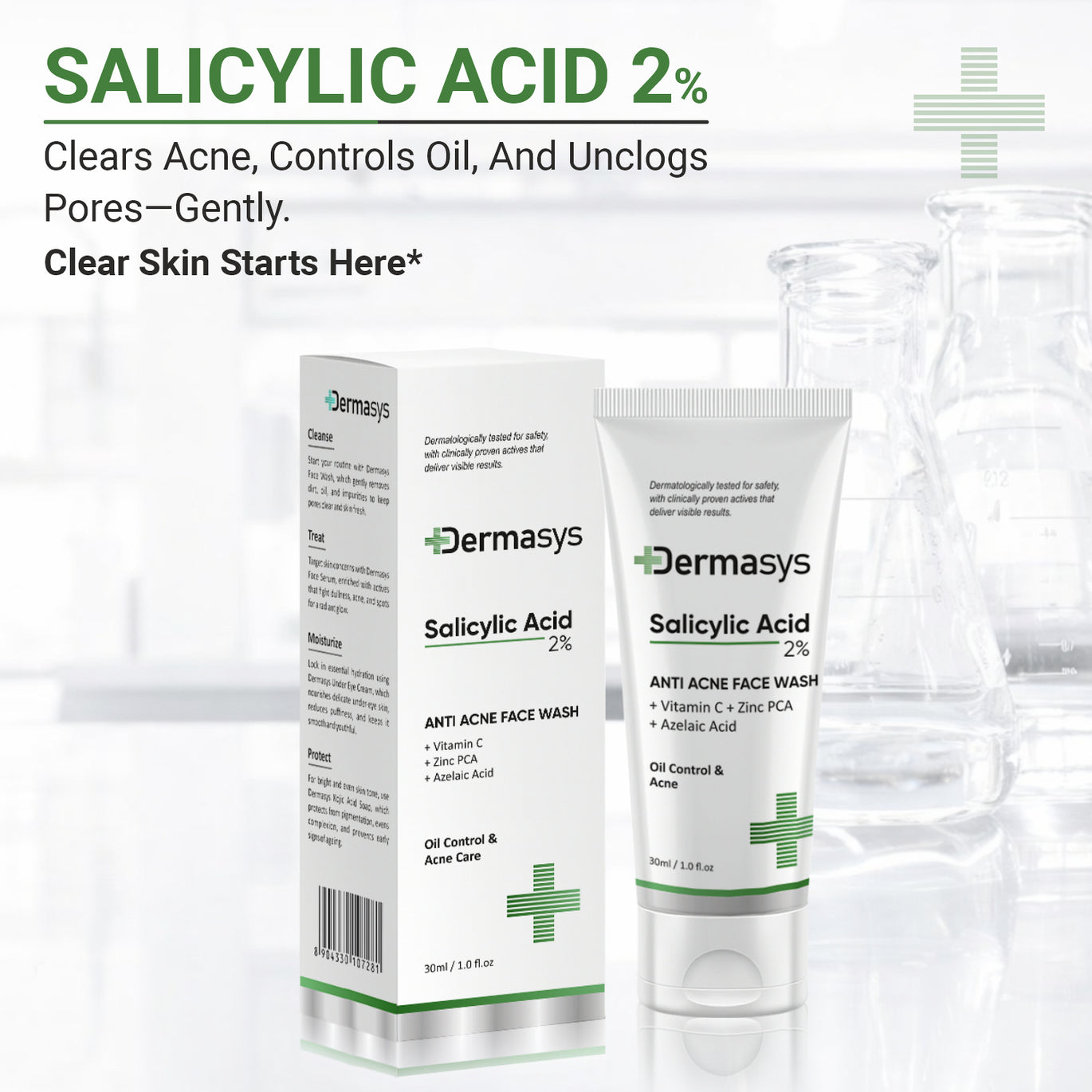
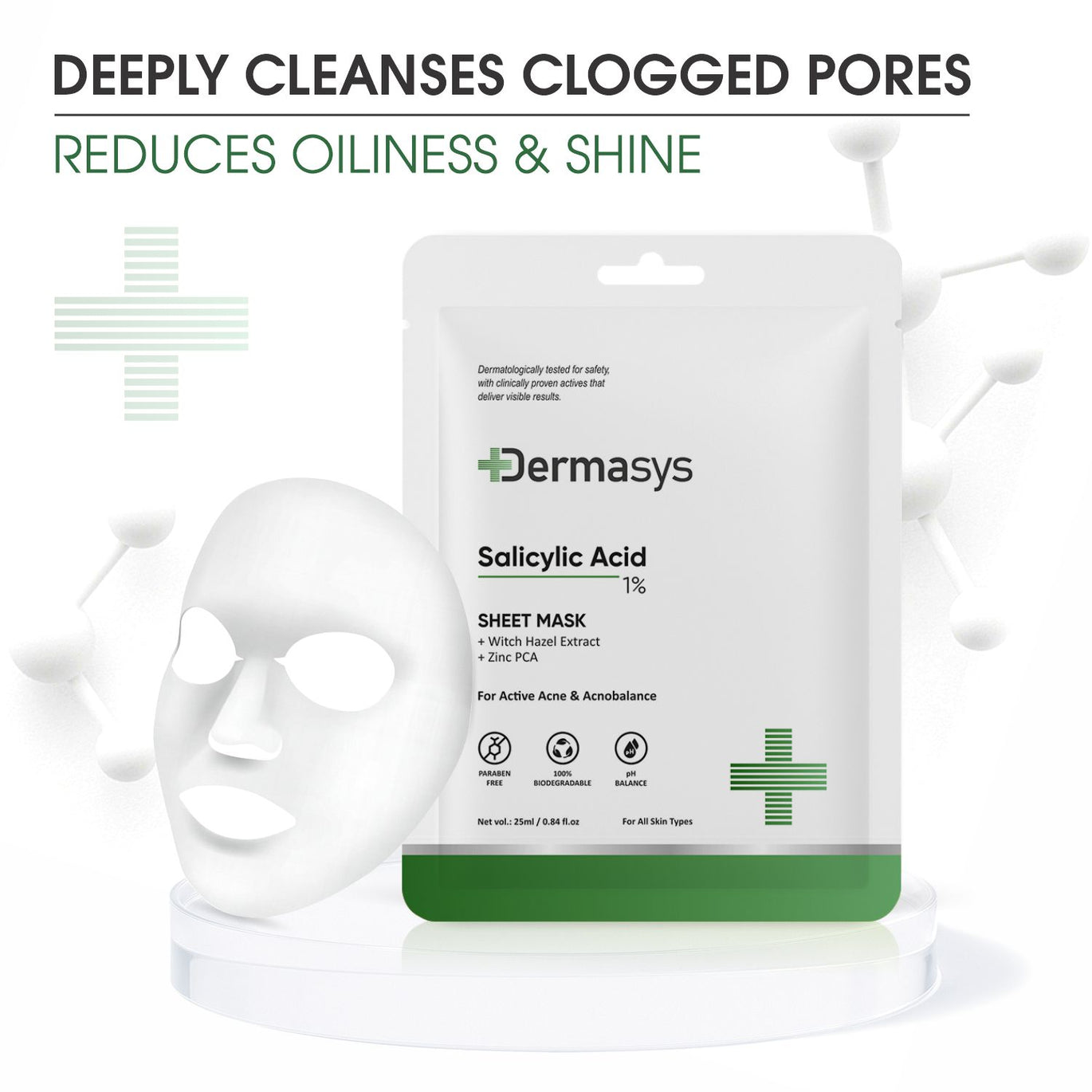
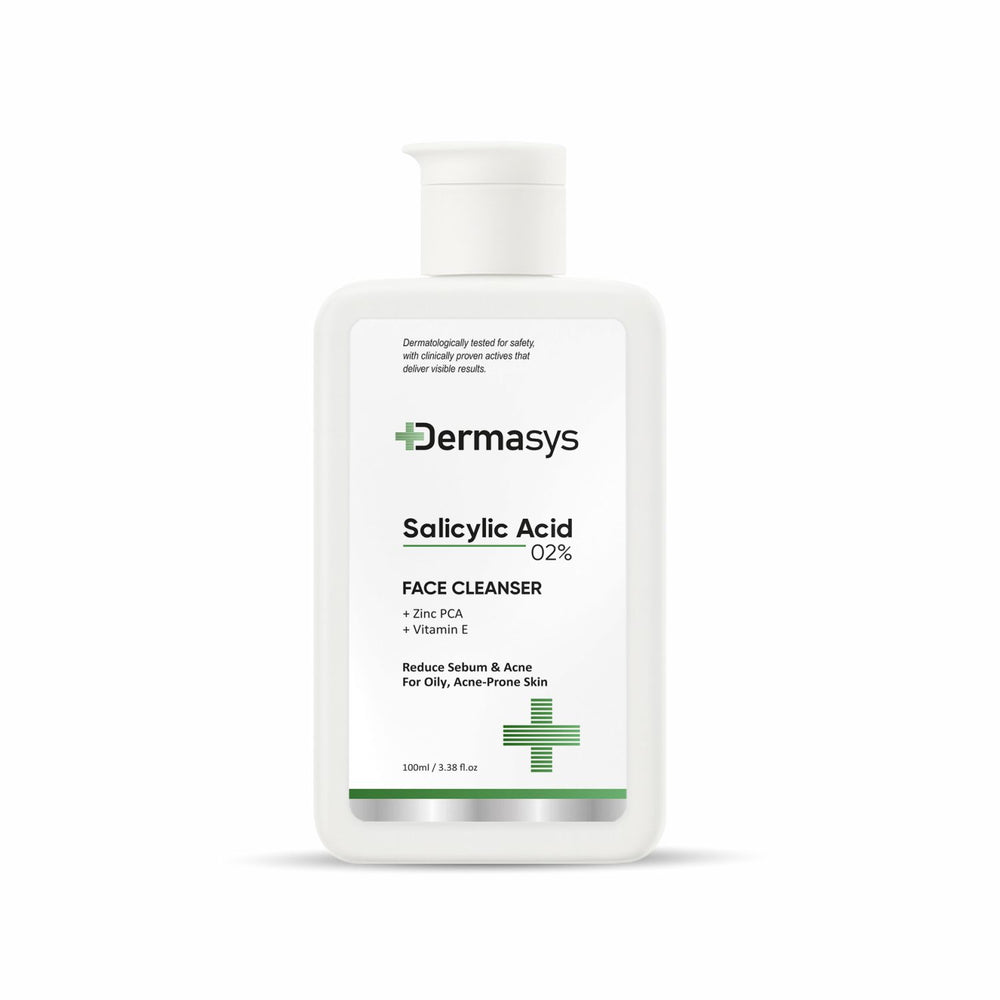
Shop Dermasys Salicylic Acid Range

How to Use Salicylic Acid: Step-by-Step Routine
- Patch test first. Apply a small amount behind your ear or on your jawline for 2 to 3 days.
- Cleanse gently with a mild face wash.
- Apply your salicylic acid product. Use a thin layer on dry skin and avoid the eye area, lips and corners of the nose.
- Moisturise. A light moisturiser reduces dryness and protects your skin barrier.
- Apply sunscreen in the morning. This is not optional. Exfoliated skin is more sensitive to sun, and sun exposure can darken acne marks, especially on Indian skin.
How often? Start 2 to 3 times a week, then build up as your skin allows. Always follow the instructions on your product label.
Morning or night? Either works. Many people prefer night for leave-on products and follow with sunscreen the next morning.
Can You Mix Salicylic Acid With Other Ingredients?
- Niacinamide: a very good partner. Niacinamide supports oil control and calms skin, while salicylic acid clears pores.
- Hyaluronic acid and ceramides: helpful for hydration and barrier support.
- Glycolic acid (AHA): can be combined by some people, but start slowly or use on alternate nights.
- Retinol / retinoids: both can irritate. Use them on different nights unless a dermatologist advises otherwise.
- Benzoyl peroxide: can be effective but also drying. Introduce one at a time.
- Vitamin C: many people use vitamin C in the morning and salicylic acid at night to reduce irritation.
Golden rule: Do not start several new actives together. Add one at a time and wait 2 weeks.
Salicylic Acid vs Glycolic Acid vs Benzoyl Peroxide
| Salicylic Acid (BHA) | Glycolic Acid (AHA) | Benzoyl Peroxide | |
|---|---|---|---|
| Works on | Inside pores | Skin surface | Acne-causing bacteria |
| Best for | Blackheads, oily skin | Dullness, rough texture | Inflamed pimples |
| Dryness risk | Moderate | Moderate | Higher |
Many routines combine these, but under guidance and one at a time.
Purging or Breakout? What to Expect in the First Weeks
When you start an exfoliating ingredient, some people see a few extra small pimples in areas where they usually break out. This is often called purging, and it usually settles within about 4 to 6 weeks.
It is more likely a bad reaction if you notice burning, intense redness, swelling, or breakouts in new areas. In that case, stop and consult a dermatologist.
Salicylic Acid Side Effects and Precautions
Salicylic acid is generally well tolerated, but overuse can cause:
- Dryness, tightness or peeling
- Redness, stinging or itching
- Skin irritation if layered with too many actives
Be careful or talk to a doctor first if you:
- Are allergic to aspirin or salicylates
- Are pregnant or breastfeeding. Low-strength topical products are often considered acceptable, but always confirm with your doctor, and avoid high-strength peels.
- Plan to use it on children or on large areas of the body
- Have eczema, open wounds, sunburn or broken skin
- Have kidney or liver disease or diabetes
Do not apply salicylic acid over large body areas for long periods or under airtight coverings. In rare cases, too much can be absorbed. Stop use and get medical help if you notice ringing in the ears, nausea, headache or confusion.
Common Mistakes to Avoid
- Using it too often, hoping for faster results
- Skipping moisturiser and sunscreen
- Picking pimples while using exfoliating acids
- Switching products every week
- Expecting results overnight
When to See a Dermatologist
Consult a skin specialist if you have painful or cystic acne, scarring, acne that does not improve after 8 to 12 weeks of regular care, or persistent dark marks.
Why Choose Dermasys?
At Dermasys, we focus on dermatologically minded skincare that is simple, effective and suited to Indian skin concerns like humidity, oil, pollution and pigmentation. Our salicylic acid range is made to help you clear pores and manage breakouts without harsh, over-drying routines.
Looking for the right product? Shop Dermasys Salicylic Acid Products Online in India
Explore All Dermasys Products
Face Wash & Cleanser


Face Serums

Salicylic Acid Face Serum
Buy Now
Retinol Face Serum
Buy Now
Derma Kojic Acid Serum
Buy Now
Derma Retinol Serum
Buy Now
5% Niacinamide Serum
Buy Now
Derma Niacinamide Serum
Buy Now
Vitamin C Face Serum
Buy Now
Kojic Acid Face Serum
Buy Now
Derma Salicylic Acid Serum
Buy Now
Derma Vitamin C Serum
Buy NowFace Sheet Masks


Hair Care


Frequently Asked Questions (FAQs)
What is salicylic acid and what does it do for skin?
Salicylic acid is a beta hydroxy acid (BHA) that exfoliates the skin and clears clogged pores. Because it is oil-soluble, it works inside oily pores to loosen sebum and dead skin cells. This makes it a go-to ingredient for acne, blackheads, whiteheads and oily skin.
What are the benefits of salicylic acid for skin?
The main benefits of salicylic acid for skin are clearer pores, fewer blackheads and whiteheads, better oil control, smoother texture and fewer new breakouts. It can also help soften rough, bumpy skin and the look of mild post-acne marks when used regularly and correctly.
Is salicylic acid good for acne?
Yes. Salicylic acid is one of the most widely used topical ingredients for mild to moderate acne, especially blackheads, whiteheads and small pimples. It unclogs pores rather than just treating the surface. Deep, painful or cystic acne usually needs a dermatologist's treatment.
How to use salicylic acid on the face?
Patch test first, cleanse your face, apply a thin layer of salicylic acid to dry skin, then moisturise. Use sunscreen every morning. Start 2 to 3 times a week and increase slowly. With a Dermasys salicylic acid product, always follow the directions on the label.
Can I use salicylic acid every day?
It depends on the product and your skin. Many people start 2 to 3 times a week and move to daily use only if the skin stays comfortable. If you notice dryness, peeling or stinging, cut back and follow the instructions on the product label.
Is salicylic acid good for oily skin?
Yes. Salicylic acid suits oily and acne-prone skin because it dissolves in oil and clears pore buildup that causes shine, blackheads and breakouts. Pair it with a light, non-comedogenic moisturiser, since oily skin can still get dry or irritated.
Is salicylic acid good for dry or sensitive skin?
It can be used, but carefully. Choose a rinse-off product such as a Dermasys salicylic acid face wash, use it 2 to 3 times a week, avoid other strong actives at the same time, and always moisturise. Stop if you notice burning or persistent redness.
What are the side effects of salicylic acid?
The most common side effects are dryness, tightness, peeling, redness and mild stinging, usually from overuse. Avoid it on broken skin, and avoid it if you are allergic to aspirin or salicylates. If irritation is severe, stop using your Dermasys or any other salicylic acid product and see a doctor.
Which is better: salicylic acid face wash or serum?
A salicylic acid face wash is rinsed off, so it is gentler and better for beginners and daily use. A serum stays on the skin and targets blackheads and clogged pores more strongly. Dermasys offers both options, so choose by your skin type and tolerance.
Where can I buy salicylic acid products online in India?
You can buy salicylic acid face wash, serum and gel online in India from the official Dermasys website. Buying from the brand's own store helps you get genuine products, clear usage directions and current offers.
Final Thoughts
Salicylic acid remains one of the most effective ingredients for oily, acne-prone skin. The key is simple: choose the right product and strength, start slowly, moisturise, use sunscreen daily, and give your skin time.
Ready to start? Explore the Dermasys salicylic acid range and build a routine your skin will thank you for.


